The Van Leeuwen lab is located at the Department of Systems Biology at UMass Chan Medical School.
Our main research interest is to use functional genomics tools to improve our understanding of how mutations can interact to produce unexpected phenotypes, and how this determines the severity of genetic traits, including human disease.
Research
The sequencing of thousands of humans has led to the identification of people that are healthy despite carrying mutations that have been directly associated with severe early-onset Mendelian diseases, such as cystic fibrosis. A plausible explanation is that these individuals carry secondary mutations elsewhere in the genome that can compensate for the deleterious effect of the disease-associated mutation, a phenomenon referred to as genetic suppression. However, we currently lack the expertise to identify these suppressor mutations among the millions of variants scattered across the genomes of these resilient individuals. Understanding the general mechanisms of suppression will aid the identification of the genes in which suppressing mutations can occur, which in turn will help define molecular mechanisms of disease and identify potential drug targets to guide the development of therapeutics.
Expanding the yeast suppression network
We previously mapped a global suppression network in the budding yeast, Saccharomyces cerevisiae, based on both literature-curated interaction data as well as novel spontaneous suppressor mutations that we identified through genetic mapping and whole-genome sequencing. These interaction networks highlighted general mechanisms of suppression, and allowed us to make detailed predictions of gene function that were not obvious from other genetic or physical interaction data. Although genetic suppression interactions can overlap with other types of interactions, they mostly define novel gene-gene relationships. Thus, expanding the global suppression network offers a new opportunity for exploring the functional wiring diagrams of a cell. We are currently generating thousands of suppressor mutations of partial loss-of-function alleles of all essential yeast genes, which provides insight on suppression mechanisms for partial loss-of-function alleles, and greatly expands the yeast suppression network. This large-scale analysis also identifies critical residues or domains within each protein and provides new insights into protein structure-function relationships.

Understanding drug resistance by chemical suppression analysis
Suppression strategies can also be applied to explore mechanisms of drug resistance, by identifying suppressors of the sensitivity of cells to a chemotherapeutic agent. Often the mutation of multiple genes can confer resistance to a drug. For instance, mutations in six genes are known to result in 6-thioguanine resistance, and dozens of genes have been related to cisplatin-resistance. To gain insight into the complex genetic interaction networks that underlie drug resistance, we are performing chemical suppression screens in a ‘wild-type’ cell line to identify genes that when mutated can confer resistance to a drug of interest. In subsequent CRISPR knockout screens, we use the resistant mutant cell lines to identify modifier genes that suppress drug resistance, and make the cells sensitive to the chemical agent again. This gains an understanding of the underlying mechanisms of chemo-resistance, and identifies potential new drug targets for combination therapies.
Suppression screens in human cell lines
The ongoing developments in CRISPR-technologies, together with the continued decline in sequencing costs, provide the opportunity to take the analysis of genetic suppression interactions to human cell lines. As most suppression interactions occur between genes that have a close functional connection, mapping suppression in human cells will gain valuable knowledge on gene and pathway function as well as on the functional wiring of a human cell. Furthermore, identifying suppressors of disease alleles may potentially yield new drug targets. We previously performed genome-wide CRISPR knockout screens in human haploid cell lines. This allowed us to identify a set of genes that are required for cell growth in all cell lines. These ‘essential’ genes are enriched for human disease genes, and are thus interesting targets for suppression analysis. As cells lacking one of these genes will have a severe fitness defect, making it difficult to perform standard genome-wide screens, we are developing new approaches to identify suppressor mutations for these genes.
Higher-order suppression interactions
Although the isolation of suppression interactions between two genes provides valuable information on functional connections between genes, multiple mutations are likely involved in affecting the penetrance of any given allele in natural populations. To be able to fully understand genotype to phenotype relationships, we thus need to map interactions involving more than two genes. We are initially harnessing the power of yeast genetics to study these complex interactions. Based on our previous suppression studies, we have defined a set of genes that when mutated cause a fitness defect which is likely to be suppressible by multiple mutations, and we are currently experimentally trying to isolate these. In addition, we are comparing the complete set of genetic interactions for a mutant allele both in presence and absence of a suppressor mutation, which allows us to identify positive or negative modifiers of the suppression interaction. These projects gain further insight into mechanisms of suppression, and increase our understanding of how multiple mutations can combine to yield phenotypes.
Publications
-
Quantitative analysis of genetic interactions in human cells from genome-wide CRISPR-Cas9 screens
Maximilian Billmann, Michael Costanzo, Mahfuzur Rahman, Katherine Chan, Amy Hin Yan Tong, Henry N. Ward, Arshia Z. Hassan, Xiang Zhang, Kevin R. Brown, Thomas Rohde, Angela H. Shaw, Catherine Ross, Jolanda van Leeuwen, Michael Aregger, Keith Lawson, Barbara Mair, Patricia Mero, Matej Usaj, Brenda Andrews, Charles Boone, Jason Moffat, Chad L Myers
bioRxiv (2025), 10.1101/2025.06.30.662330
-
A global genetic interaction map of a human cell reveals conserved principles of genetic networks
Maximilian Billmann, Michael Costanzo, Xiang Zhang, Arshia Z Hassan, Mahfuzur Rahman, Kevin R Brown, Katherine S Chan, Amy HY Tong, Carles Pons, Henry N Ward, Catherine Ross, Jolanda van Leeuwen, Michael Aregger, Keith A Lawson, Barbara Mair, Amy F Roth, Nesli E Sen, Duncan T Forster, Guihong Tan, Patricia Merro, Sanna N Masud, Yoonkyu Lee, Magali Aguilera-Uribe, Matej Usaj, Sylvia MT Almeida, Kamaldeep Aulakh, Urvi Bhojoo, Saba Birkadze, Nathaniel Budijono, Xunhui Cai, Joseph J Caumanns, Megha Chandrashekhar, Daniel Chang, Ryan Clinie, Kuheli Dasgupta, Adrian Drazic, Jose I Rojas Echenique, Rafael Gacesa, Adrian Granda Farias, Andrea Habsid, Ira Horecka, Krsitin Kantautas, Fenghu Ji, Dae-Kyum Kim, Seon Yong Lee, Wendy Liang, Julianne Lim, Kevin Lin, Xueyibing Lu, Babak Nami, Allison Nixon, Nicholas Mikolajewicz, Lyudmila Nedyalkova, Thomas Rohde, Maria Sartori Rodrigues, Martin Soste, Eric Schultz, Wen Wang, Ashwin Seetheraman, Ermira Shuteriqi, Olga Sizova, David Thomson Taylor, Maria Tereschchenko, David Tieu, Jacob Turowec, Tajinder Ubhi, Sylvia Varland, Kyle E Wang, Ziyang Wang, Jiarun Wei, Yu-Xi Xiao, Grant W Brown, Benjamin Cravatt, Scott J Dixon, Haley DM Wyatt, Hannes L Röst, Frederick P Roth, Tian Xia, Gary Bader, Robbie Loewith, Nicholas G Davis, Brenda J Andrews, Chad L Myers, Jason Moffat, Charles Boone
bioRxiv (2025), 10.1101/2025.06.30.662193
-
The modifiers that cause changes in gene essentiality
Amandine Batté, Núria Bosch-Guiteras, Carles Pons, Marina Ota, Maykel Lopes, Sushma Sharma, Nicolò Tellini, Claire Paltenghi, Michelle Conti, Kwan Ting Kan, Uyen Linh Ho, Michaël Wiederkehr, Jonas Barraud, Mark Ashe, Patrick Aloy, Gianni Liti, Andrei Chabes, Leopold Parts, and Jolanda van Leeuwen
Cell Systems (2025), in press
-
Genetic suppression interactions are highly conserved across genetically diverse yeast isolates
Claire Paltenghi and Jolanda van Leeuwen
G3 (Bethesda) (2025), 15, jkaf047
PDF / Pubmed -
Meta-analysis of dispensable essential genes and their interactions with bypass suppressors
Carles Pons and Jolanda van Leeuwen
Life Sci Alliance (2023), 7, e202302192
PDF / Pubmed -
Global analysis of suppressor mutations that rescue human genetic defects
Betül Ünlü, Carles Pons, Uyen Linh Ho, Amandine Batté, Patrick Aloy, and Jolanda van Leeuwen
Genome Med (2023), 15, 78
PDF / Pubmed -
Highlights from the 1st European Cancer Dependency Map symposium and workshop
Lucia Trastulla, Aurora Savino, Pedro Beltrao, Isidro Cortés Ciriano, Peter Fenici, Mathew J Garnett, Ilaria Guerini, Nuria Lòpez Bigas, Iain Mattaj, Evangelia Petsalaki, Laura Riva, Christopher J Tape, Jolanda van Leeuwen, Sumana Sharma, Francisca Vazquez, and Francesco Iorio
FEBS Lett (2023), 597, 1921-1927
PDF / Pubmed -
Exploring conditional gene essentiality through systems genetics approaches in yeast
Núria Bosch-Guiteras and Jolanda van Leeuwen
Curr Opin Genet Dev (2022), 76, 101963
PDF / Pubmed -
Predicting base editing outcomes using position-specific sequence determinants
Ananth Pallaseni, Elin Madli Peets, Jonas Koeppel, Juliane Weller, Thomas Vanderstichele, Uyen Linh Ho, Luca Crepaldi, Jolanda van Leeuwen, Felicity Allen, and Leopold Parts
Nucleic Acids Res (2022), gkac161
PDF / Pubmed -
Chl1 helicase controls replication fork progression by regulating dNTP pools
Amandine Batté, Sophie C van der Horst, Mireille Tittel-Elmer, Su Ming Sun, Sushma Sharma, Jolanda van Leeuwen, Andrei Chabes, and Haico van Attikum
Life Sci Alliance (2022), 5, e202101153
PDF / Pubmed -
Natural variants suppress mutations in hundreds of essential genes
Leopold Parts, Amandine Batté, Maykel Lopes, Michael W. Yuen, Meredith Laver, Bryan- Joseph San Luis, Jia-Xing Yue, Carles Pons, Elise Eray, Patrick Aloy, Gianni Liti, and Jolanda van Leeuwen
Mol Syst Biol (2021), 17, e10138
PDF / Pubmed -
Systematic analysis of bypass suppression of essential genes
Jolanda van Leeuwen, Carles Pons, Guihong Tan, Jason Zi Wang, Jing Hou, Jochen Weile, Marinella Gebbia, Wendy Liang, Ermira Shuteriqi, Zhijian Li, Maykel Lopes, Matej Ušaj, Andreia Dos Santos Lopes, Natascha van Lieshout, Chad L. Myers, Frederick P. Roth, Patrick Aloy, Brenda J. Andrews, and Charles Boone
Mol Syst Biol (2020), 16, e9828
PDF / Pubmed -
Exploring whole-genome duplicate gene retention with complex genetic interaction analysis
Elena Kuzmin, Benjamin VanderSluis, Alex N. Nguyen Ba, Wen Wang, Elizabeth N. Koch, Matej Usaj, Anton Khmelinskii, Mojca Mattiazzi Usaj, Jolanda van Leeuwen, Oren Kraus, Amy Tresenrider, Michael Pryszlak, Ming-Che Hu, Brenda Varriano, Michael Costanzo, Michael Knop, Alan Moses, Chad L. Myers, Brenda J. Andrews, and Charles Boone
Science (2020), 368, 1446
PDF / Pubmed -
Global genetic networks and the genotype to phenotype relationship
Michael Costanzo, Elena Kuzmin, Jolanda van Leeuwen, Barbara Mair, Jason Moffat, Charles Boone, and Brenda J. Andrews
Cell (2019), 177, 85-100
PDF / Pubmed -
Genetic network complexity shapes background-dependent phenotypic expression
Jing Hou, Jolanda van Leeuwen, Brenda J. Andrews, and Charles Boone
Trends Genet (2018), 34, 578-586
PDF / Pubmed -
Yeast Aim21/Tda2 both regulates free actin by reducing barbed end assembly and forms a complex with Cap1/Cap2 to balance actin assembly between patches and cables
Myungjoo Shin, Jolanda van Leeuwen, Charles Boone, and Anthony Bretscher
Mol Biol Cell (2018), 29, 923-936
Pubmed -
Systematic analysis of complex genetic interactions
Elena Kuzmin, Benjamin VanderSluis, Wen Wang, Guihong Tan, Raamesh Deshpande, Yiqun Chen, Matej Usaj, Attila Balint, Mojca Mattiazzi Usaj, Jolanda van Leeuwen, Elizabeth N. Koch, Carles Pons, Andrius J. Dagilis, Michael Pryszlak, Zi Wang, Julia Hanchard, Margot Riggi, Kaicong Xu, Hamed Heydari, Bryan-Joseph San Luis, Ermira Shuteriqi, Hongwei Zhu, Nydia Van Dyk, Sara Sharifpoor, Michael Costanzo, Robbie Loewith, Amy Caudy, Daniel Bolnick, Grant W. Brown, Brenda J. Andrews, Charles Boone, and Chad L. Myers
Science (2018), 360, eaa01729
PDF / Pubmed -
Mapping a diversity of genetic interactions in yeast
Jolanda van Leeuwen, Charles Boone, and Brenda J. Andrews
Curt Opin Syst Biol (2017), 6, 14-21
PDF / Pubmed -
Evaluation and design of genome-wide CRISPR/Cas9 knockout screens
Traver Hart, Amy Tong, Katie Chan, Jolanda van Leeuwen, Ashwin Seetharaman, Michael Aregger, Megha Chandrashekhar, Nicole Hustedt, Sahil Seth, Avery Noonan, Andrea Habsid, Olga Sizova, Lyudmilla Nedyalkova, Ryan Climie, Leanne Tworzyanski, Keith Lawson, Maria Augusta Sartori, Sabriyeh Alibeh, David Tieu, Sanna Masud, Patricia Mero, Alexander Weiss, Kevin R. Brown, Matej Usaj, Maximilian Billmann, Mahfuzur Rahman, Michael Costanzo, Chad L. Myers, Brenda Andrews, Charles Boone, Daniel Durocher, and Jason Moffat
G3 (Bethesda) (2017), 7, 2719-2727
PDF / Pubmed -
Functional annotation of chemical libraries across diverse biological processes
Jeff S. Piotrowski*, Sheena C. Li*, Raamesh Deshpande*, Scott W. Simpkins*, Justin Nelson, Yoko Yashiroda, Jacqueline M. Barber, Hamid Safizadeh, Erin Wilson, Hiroki Okada, Abraham A. Gebre, Karen Kubo, Nikko Torres, Marissa A. LeBlanc, Kerry Andrusiak, Reika Okamoto, Mami Yoshimura, Eva DeRango-Adem, Jolanda van Leeuwen, Katsuhiko Shirahige, Anastasia Baryshnikova, Grant W. Brown, Hiroyuki Hirano, Michael Costanzo, Brenda Andrews, Yoshikazu Ohya, Hiroyuki Osada, Minoru Yoshida, Chad L. Myers, and Charles Boone
Nat Chem Biol (2017), 13, 982-993
PDF / Pubmed -
Mechanisms of suppression: the wiring of genetic resilience
Jolanda van Leeuwen, Carles Pons, Charles Boone, and Brenda J. Andrews
BioEssays (2017), 39, 1700042
PDF / Pubmed -
The effect of acetaminophen on ubiquitin homeostasis in Saccharomyces cerevisiae
Angelina Huseinovic, Jolanda S. van Leeuwen, Tibor van Welsem, Fred van Leeuwen, Nico. P.E. Vermeulen, Jan M. Kooter, and J. Chris Vos
PLoS One (2017), 12, e017357
PDF / Pubmed -
Exploring genetic suppression interactions on a global scale
Jolanda van Leeuwen*, Carles Pons*, Joseph C. Mellor, Takafumi N. Yamaguchi, Helena Friesen, John Koschwanez, Mojca Mattiazzi Ušaj, Maria Pechlaner, Mehmet Takar, Matej Ušaj, Benjamin VanderSluis, Kerry Andrusiak, Pritpal Bansal, Anastasia Baryshnikova, Claire Boone, Jessica Cao, Atina Cote, Marinella Gebbia, Gene Horecka, Ira Horecka, Elena Kuzmin, Nicole Legro, Wendy Liang, Natascha van Lieshout, Margaret McNee, Bryan-Joseph San Luis, Fatemeh Shaeri, Ermira Shuteriqi, Song Sun, Lu Yang, Ji-Young Youn, Michael Yuen, Michael Costanzo, Anne-Claude Gingras, Patrick Aloy, Chris Oostenbrink, Andrew Murray, Todd R. Graham, Chad L. Myers, Brenda J. Andrews, Frederick P. Roth, and Charles Boone
Science (2016), 354, 599
PDF / Pubmed -
A global genetic interaction network maps a wiring diagram of cellular function
Michael Costanzo*, Benjamin VanderSluis*, Elizabeth N. Koch*, Anastasia Baryshnikova*, Carles Pons*, Guihong Tan*, Wen Wang, Matej Usaj, Julia Hanchard, Susan D. Lee, Vicent Pelechano, Erin B. Styles, Maximilian Billmann, Jolanda van Leeuwen, Nydia van Dyk, Zhen-Yuan Lin, Elena Kuzmin, Justin Nelson, Jeff S. Piotrowski, Tharan Srikumar, Sondra Bahr, Yiqun Chen, Raamesh Deshpande, Christoph F. Kurat, Sheena C. Li, Zhijian Li, Mojca Mattiazzi Usaj, Hiroki Okada, Natasha Pascoe, Bryan-Joseph San Luis, Sara Sharifpoor, Emira Shuteriqi, Scott W. Simpkins, Jamie Snider, Harsha Garadi Suresh, Yizhao Tan, Hongwei Zhu, Noel Malod-Dognin, Vuk Janjic, Natasa Przulj, Olga G. Troyanskaya, Igor Stagljar, Tian Xia, Yoshikazu Ohya, Anne-Claude Gingras, Brian Raught, Michael Boutros, Lars M. Steinmetz, Claire L. Moore, Adam P. Rosebrock, Amy A. Caudy, Chad L. Myers, Brenda Andrews, and Charles Boone
Science (2016), 353, 1381
PDF / Pubmed -
Construction of multi-fragment plasmids by homologous recombination in yeast (topic introduction)
Jolanda van Leeuwen, Brenda Andrews, Charles Boone, and Guihong Tan
Cold Spring Harb Protoc (2015), 9, pdb.top084111
PDF / Pubmed -
Rapid and efficient plasmid construction by homologous recombination in yeast (protocol)
Jolanda van Leeuwen, Brenda Andrews, Charles Boone, and Guihong Tan
Cold Spring Harb Protoc (2015), 9, pdb.prot085100
PDF / Pubmed -
Yeast as a humanized model organism for biotransformation-related toxicity
Jolanda S. van Leeuwen, Nico P.E. Vermeulen, and J. Chris Vos
Curr Drug Metab (2012), 13, 1464-1475
PDF / Pubmed -
Differential involvement of mitochondrial dysfunction, cytochrome P450 activity and active transport in the toxicity of structurally related NSAIDs
Jolanda S. van Leeuwen, Betül Ünlü, Nico P.E. Vermeulen, and J. Chris Vos
Tox In Vitro (2012), 26, 197-205
PDF / Pubmed -
Involvement of the pleiotropic drug resistance response, protein kinase C signaling, and altered zinc homeostasis in resistance of Saccharomyces cerevisiae to diclofenac.
Jolanda S. van Leeuwen, Nico P.E. Vermeulen, and J. Chris Vos
Appl Environ Microbiol (2011), 77, 5973-5980
PDF / Pubmed -
Efficient screening of P450 BM3 mutants for their metabolic activity and diversity towards a wide set of drug-like molecules in chemical space
Jelle Reinen, Jolanda S. van Leeuwen, Yongmin Li, Lifang Sun, Peter D.J. Grootenhuis, Caroline J. Decker, John Saunders, Nico P.E. Vermeulen, and Jan N.M. Commandeur
Drug Metab Dispos (2011), 39, 1568-1576
PDF / Pubmed -
Metabolism related toxicity of diclofenac in yeast as model system
Jolanda S. van Leeuwen, Galvin Vredenburg, Sanja Dragovic, T.F. Jennifer Tjong, J. Chris Vos, and Nico P.E. Vermeulen
Toxicol Lett (2011), 200, 162-168
PDF / Pubmed -
Subunits Rip1p and Cox9p of the respiratory chain contribute to diclofenac-induced mitochondrial dysfunction
Jolanda S. van Leeuwen, Rick Orij, Marijke Luttik, Gertien J. Smits, Nico P.E. Vermeulen, and J. Chris Vos
Microbiology (2011), 157, 685-694
PDF / Pubmed -
Yeast as a model eukaryote in drug safety studies: New insights on diclofenac-induced toxicity (thesis)
Jolanda S. van Leeuwen
(2011)
PDF
People
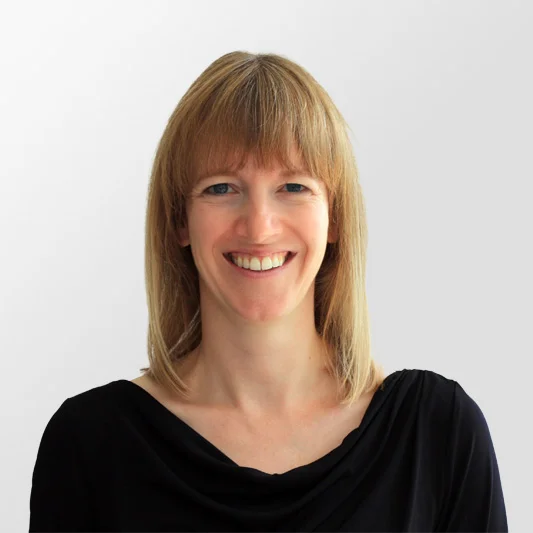

Matthew Audette
Admin coordinator

Kathleen Ben-Aroch
Research associate
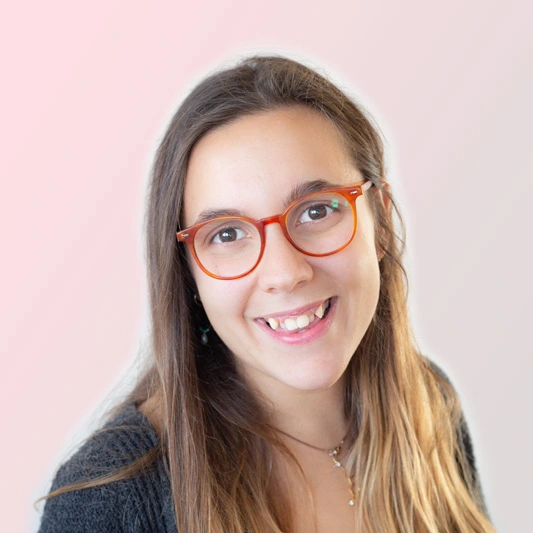
Núria Bosch
Postdoctoral Fellow

Michelle Conti
Postdoctoral Fellow
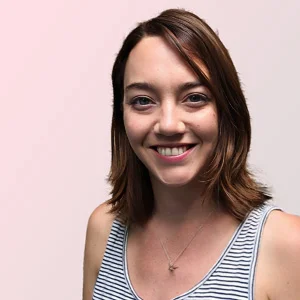
Sabine van Schie
Postdoctoral Fellow
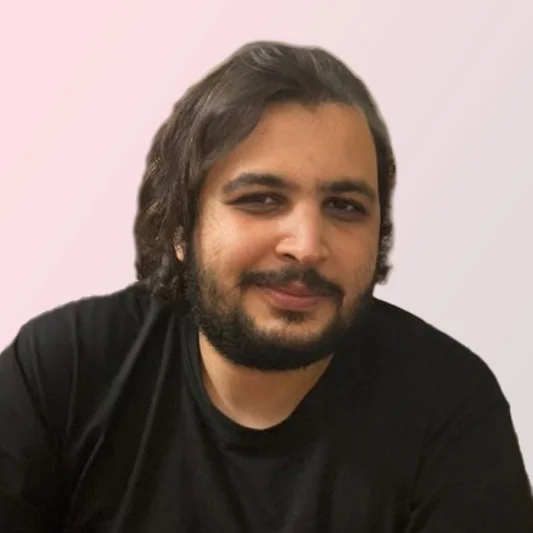
Erfan Heidari
PhD student
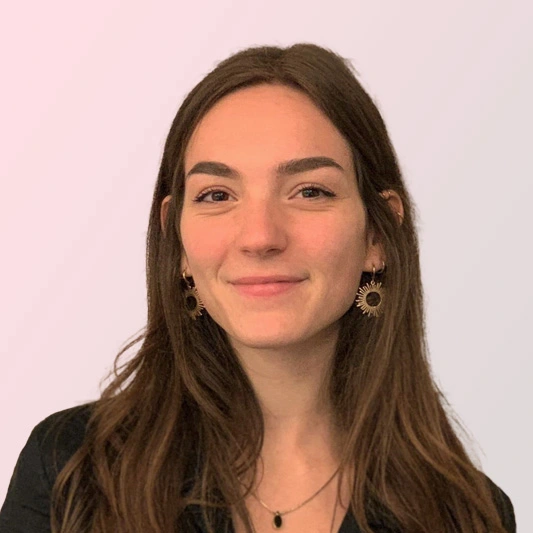
Claire Paltenghi
PhD student

Sumaira Perez
PhD student

Alix Abrecht
MSc student
Alumni
Marina Ota - Technician / Jana Sheikh Ammar - Research assistant / Amandine Batté - Postdoctoral fellow / Antoine Chatillon - Research assistant / Linh Ho - PhD student / Camille Schmidt - MSc student / Jana Brenner - Research assistant / Abigail Yoel - Summer student / Betül Ünlü - Postdoctoral fellow / Nadine Eliasson - Research assistant / Loïc Zen-Ruffinen - MSc student / Eve Magnin - Research assistant / Jade Nicolet - MSc student / Karunnya Tharmakulasinkam - MSc student / Maykel Lopes - Technician / Monalisa Das - Technician / Elise Eray - MSc student / Christopher Forbes-Jaeger - MSc student / Dinis Barros - PhD student / Jonas Barraud - Technician apprentice / Andreia Dos Santos Lopes - Technician / Jessica Burnier - MSc student / Michaël Wiederkehr - Technician
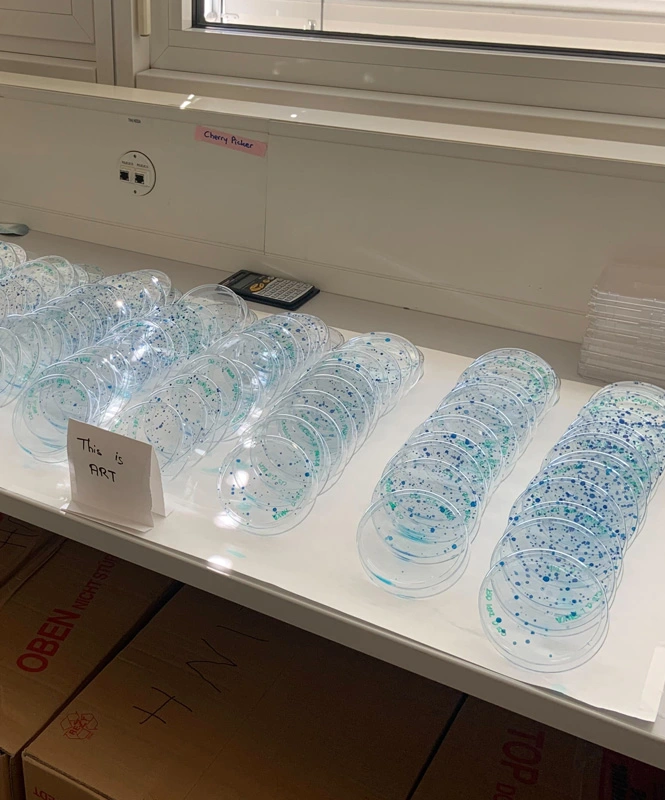
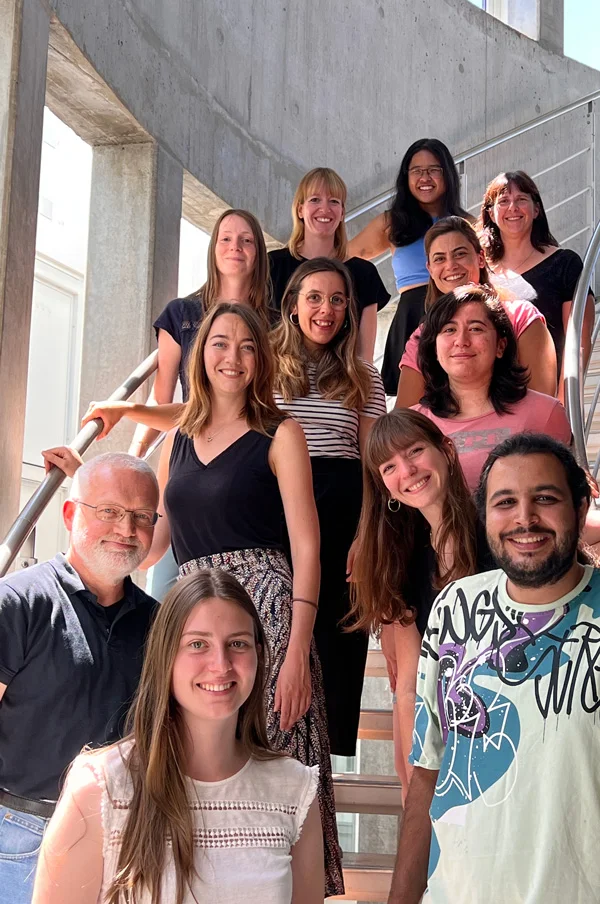
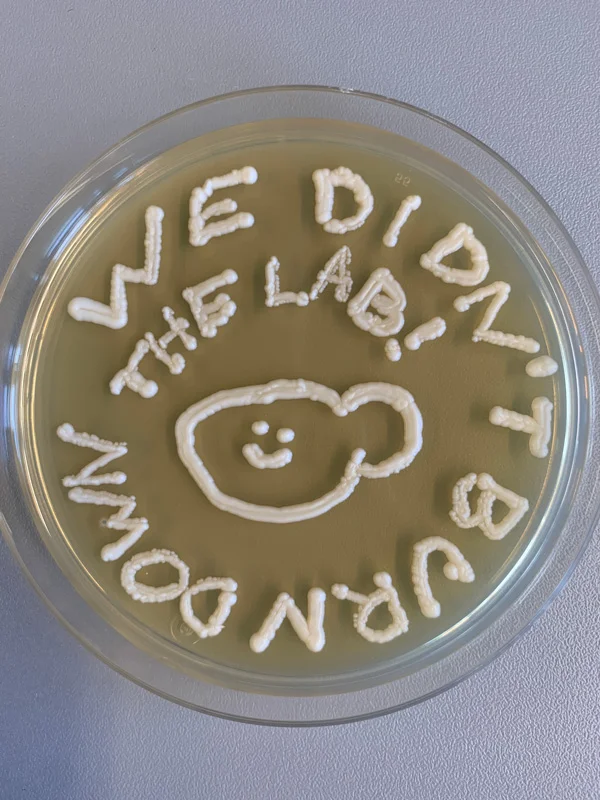
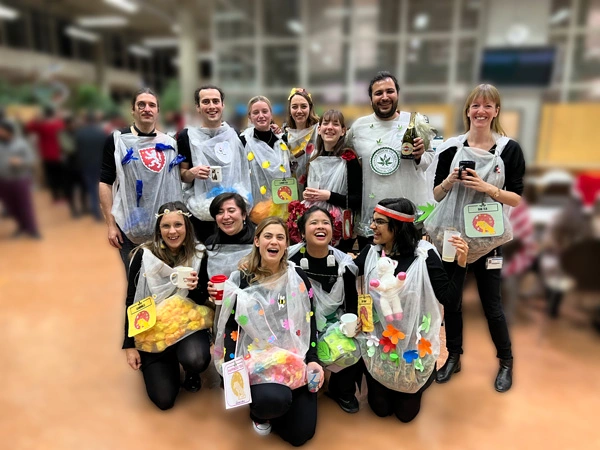
Lab photos


Media Coverage
- Cell Systems, Voices, What is the current bottleneck in mapping molecular interaction networks?
- Nature Biotechnology, Adrestia Therapeutics — Gene networks to the rescue
- RTS (Swiss radio station), CQFD, radio interview on CRISPR technology
- Science Daily, 'Rescue mutations' that suppress harmful DNA changes could shed light on genetic disorders
- Biomedical Picture of the Day, Rescue Me
- Outreach video, Genetic networks: mapping risk and tailoring treatment
- Quanta magazine, Why some genetic miscues are helpful
- The Scientist, Mutation vs. Mutation